Monday, May 23, 2011
Dream Journal #7
Had a strange dream last night involving husband-and-wife evangelists/cult leaders who may have been based on a similar husband-and-wife team from Season 2 of True Blood, a show I haven't watched for several months. They were really into fishing ("fishers of men"?) for some reason, and at some point I think I swallowed a small, live fish whole. They were also control freaks, in true cult leader fashion, at one point inserting a small metal button or peg in the floor so that I couldn't close the door to my bedroom. I was living in some sort of communal house with them and some other people who'd fallen under their spell. I seemed to be the only person who knew that the situation was bad news, but no one would believe me. My favorite detail of the dream was that the cult leaders had some sort of Christian rock band who played in the style of the early Sir Douglas Quintet, and they'd had great success recruiting wannabe Sir Dougs from Sweden, where there was apparently a large group of young SDQ fans ripe for cult indoctrination.

Wednesday, May 18, 2011
The Selected Ballads Selects...Coffee and Baked Goods
Stumptown is my go-to supplier for coffee beans, as they have a great selection, they get consistently good beans, and they seem to know how to roast to just the right level. Just about everything I try from them makes a great cup of coffee, though I tend to like the Guatemalan and Ethiopian coffees the best. Hopefully this was an anomaly, but on my last trip to the Ace Hotel location, I had a hard time finding any beans roasted most recently than a week before. I feel a little silly even mentioning this, but Stumptown has spoiled me with their usually dependable freshness (often selling beans roasted the previous day), and after all, the beans only have to make it from Red Hook to the Flatiron. When I see Stumptown for sale in Brooklyn stores like Union Market and Blue Apron, it's much more common to see that they've been sitting around for a week or two.
After running out of my last bag of Stumptown beans, I decided to give Gorilla Coffee another try. I'd written their coffee off as overroasted, with the consistently heavy hand on the roaster eliminating flavor differences between single-source beans from different parts of the world, but based on the Guatemalan beans I just bought from them, they seem to have eased up, much to the coffee's benefit. After only one cup, I can't judge the new-and-improved Gorilla yet, but if I was going to name some honorable mentions behind Stumptown, the first two that come to mind are La Colombe, the Philly roaster that now has cafes in Manhattan, and Blue Bottle, the San Fran "microroaster" with a Williamsburg location. Blue Bottle is probably Stumptown's nearest competitor in quality and attention to detail in their cafe - they've been getting serious with their baked goods lately and they serve NYC's best (and possibly most expensive) iced coffee. La Colombe takes a different (Italian-influenced) approach, focusing on blending rather than single-source coffee, and roasting darker across the board. Though I tend to like lighter roasts than the typical La Colombe coffee, they seem to really know what they're doing, and if I'm in the mood to switch things up with a darker roast, I'll go with one of their blends. Intelligentsia beans (from Chicago), some of the best in the country, are available at a couple places in NYC, but haven't been fresh when I've looked at them as I don't think they're being roasted locally. I'll pick up a bag next time I'm in Chicago.
[Update: good piece on Stumptown here - "the Jesus Christ of caffeinated beverages"]
---------------
For me, the undisputed king of NYC bakeries is still Almondine - their bread is the best (they wisely stick to a few basic French styles that they've mastered, rather than trying to be everything to everybody) and they can contend with anyone in the pastry and cake department (I was very fortunate to receive some of Almondine's superb macarons as a gift recently). Grandaisy is not far behind, though, and may be the best bakery in Manhattan, also very strong in both bread and sweet stuff (my observations are based on the W 72nd St location). In Brooklyn, Marlow & Sons, though only having a small pastry case at the front of the restaurant, produces consistently excellent scones, biscuits, and the like. I also tried Peels on the Bowery for the first time recently, and the two items I got (a biscuit and a banana donut) were enough to convince me of its potential elite baked goods status.
Venturing into still sweeter realms, I was in Yorkville for the first time in some time over the weekend and stopped in at Two Little Red Hens. I was glad to be reassured that it's still the place to go for unpretentious and unashamedly sweet and rich desserts - cookies, lemon (or lime-coconut) bars, cakes/cupcakes, and though they didn't have it when I stopped in, the best cake/loaf-style gingerbread I know of. Unfortunately (or perhaps fortunately for my health), I didn't make it to neighborhood landmark and old-school butter-bomb cookie and pastry provider Glaser's. I need to get back there for what may be the world's greatest prune danish before they go on their annual extended summer break.
On the doughnut front, I've been hearing great things about Dough, the new place in Clinton Hill. While a still-warm dulce de leche from Doughnut Plant has put doubt into my mind at least once and Pies 'n' Thighs puts out a fine product (though they don't taste quite as good as they look - P'n'T might have, to my eye, the most visually appealing donuts in town), I still haven't found any place that seriously challenges Greenpoint's Peter Pan for NYC donut supremacy. I do tend to favor the purity of an unadorned or lightly glazed cake donut over the yeast-raised, heavily-iced-in-exotic-flavors style Dough seems to be working in, but I look forward to trying their offerings with an open mind. I've somehow not mentioned pie in this post, but Four & Twenty Blackbirds in the Gowanus is also high on my list of places to try.
As a final note, I'm pretty sure I got fatter just by typing the second half of this post.
Thursday, May 5, 2011
Recent (and Less Recent) Live Music, Part One
Although it's already been said better, I feel I should add one more voice to the chorus of enthusiasm for the meeting of contemporary titans that was The Bad Plus w/ Joshua Redman at the Blue Note. To say that Redman was able to find a place within TBP's often tightly arranged tunes would be a huge understatement. If I was to employ a deliberately terrible mixed metaphor, I would say that like master jewelers, the trio gave Redman a setting in which to shine and he knocked that s**t out of the park. For every mood and mode that The Bad Plus explored (and they get to lots of different places in a single set), Redman was right there with something profound (and often jaw-dropping) to add to the mix.
I do regret not planning ahead and getting stuck in the SRO bar area with a terrible sightline, but even at that remove it was impossible to miss the strong musical message that was being delivered - TBP's inimitable compositions taken to the next level live. "People Like You" and "Layin' a Strip for the Higher-Self State Line" are the first titles that come to mind as highlights, but there were many, many great moments spread through the set I saw (which also included, if memory serves, "Who's He?" and "Dirty Blonde" - I didn't make any notes).
I can't fault the Blue Note on its bookings - they bring in some of the best - but the decor does tend to give one the unsettling feeling (as I'm sure I'm not the first to point out) of having walked into the highest tier "gentleman's club" in a medium-to-large size Midwestern city, so that seeing someone with, for example, the elegance and stature of Ron Carter on stage there can seem almost distractingly incongruous. I suppose the defiantly unremodeled yet far-from-classic interior could serve as a sobering commentary on the economic viability of presenting jazz seven nights a week in the current economic and cultural climate. Mirrors and neon or not, they keep pulling me back in by booking musicians that are just undeniable, such as James Carter with 'Blood' Ulmer and Nicholas Payton (more about that in the forthcoming Part Two of this post).
I was at The Stone twice recently, finally seeing Dr. Eugene Chadbourne after listening to his music on and off for many years, and seeing the mighty Ken Vandermark in a duo with Joe Morris on guitar. Though he originally made his reputation as a downtown/avant guitar weirduoso, the Doc's recent solo set left no doubt that he's also a heckuva songwriter (highlights in that department included "God Made Country Music" and "Old Piano") and a great (though still plenty weird) banjo player. Come to think of it, I'd love to see a guitar-banjo duo with Morris and Chadbourne (looks like they have recorded together). If Clifford Jordan and John Gilmore hadn't already used the album title Blowin' In From Chicago, it would suit Ken Vandermark perfectly. His technique is highly advanced, but at the same time, he makes it very clear that playing the saxophone essentially involves blowing into a tube. There was no shortage of brains or guts in the Vandermark-Morris duo.
I saw the Mary Halvorson Quintet at Barbes for a second time (the first time, I think they were playing a mixture of material from the trio album Dragon's Head and some then-new compositions that would end up on Saturn Sings, but I may be combining it in my memory with an earlier trio gig). In any case, with the newer material firmly under their belts, the growth of the group sound and of Halvorson's compositions was very much in evidence. This group, already acclaimed well beyond the Brooklyn scene centered on venues like Barbes and Korzo, just keeps getting better.
For the March installment of Tower of Song, a monthly songwriter's-circle-type deal at Rock Shop, host/organizer Jennifer O'Connor outdid herself, assembling a very heavy lineup: Tim Bracy, formerly of Mendoza Line; the undisputed Queen of Country Music in Brooklyn and personal favorite of John Peel, Laura Cantrell; and a man who must be one of the most underappreciated songwriting talents of our time, 33-1/3 author and sometime John Darnielle collaborator Franklin Bruno. The performers made the most of being onstage together as a group, covering each others songs and contributing harmonies and extra guitar and keyboard parts. The highlight of the show may have been Bruno's song inspired by Felix Gonzalez-Torres' Untitled (Perfect Lovers). I don't know if he's recorded it, and I'm not even sure of the title, but I'd really like to hear it again.
I guess these YouTube clips (scroll down on the right-hand column) of the '80s-era public access jazz chat show The John Lewis Show (not the famous pianist or the civil rights leader and politician, but the less famous drummer) have been circulating for a while, but I just discovered them via A Blog Supreme and they are my new favorite thing. Ron Jefferson, the Ed McMahon to Lewis' Carson, must have been one of the hippest people alive at the time (not to mention "dynamic", "prolific", and "beautiful"). The show provides a valuable historical window into '80s jazz fashions, though I assume that Jefferson's bow tie in this segment was purely his own thing and not representative of any current trend. And fans of The Fighter might enjoy the interview Lewis and Jefferson conducted with boxer Saoul Mamby (who, at a critical turning point of that movie, pulls out of a fight with Micky Ward at the last minute). Lewis has DVDs of the full-length shows available here.
Next time in Part Two: Bill Frisell! Paul Motian! Neil Young! James Carter! and more?
And a final word from Schroeder:
More true than I'd like to admit.
Friday, April 22, 2011
All Souls
While reading Javier Marías' three-part Your Face Tomorrow, I didn't realize that the main character/narrator had appeared in some of the author's earlier works. When I came across that piece of information, reading some of the YFT discussions at Conversational Reading, I went out, bought and read All Souls, where (as far as I know) Marías originated his Oxonian Madrileño character, Jacques/Jaime/Jacobo Deza. Even though the action of All Souls takes place some years before the plot of Your Face Tomorrow begins, reading the first novel second enhanced my appreciation of both books and my understanding of Marías' style and thematic preoccupations. There are many parallels and resonances between the books - both have key scenes involving the main character following/observing someone in a museum, and both build up to the story of a suicide. Besides these parallel features, there are also many "callbacks" from All Souls in YFT - characters, stories, quotations, ideas - a theory of horror illustrated by a gypsy flower seller and a three-legged dog, to name one of the most memorable.
It doesn't seem as if Marías planned for All Souls to be the first in any kind of series of books featuring the character Deza (in fact, he isn't even named in All Souls, perhaps deliberately tempting the reader - despite a warning at the front of the book - to identify him with the author). In YFT, it seems that Marías had to find a way of bringing a character that he killed off in All Souls back to life because he wanted to write more about him. The solution, inventing a surviving brother with very similar life experiences, may seem contrived but it's hard to imagine how YFT could have existed without Marías solving this problem in some way, so central is this character (Rylands/Wheeler, revealed at the end of YFT to have been based on a real Oxford mentor figure of the author's) to the story. Apparently, there are other Marías novels with shared characters, including the follow-up/sequel to All Souls, Dark Back of Time, which I plan to read soon. Brief, brilliant, and surely one of the greatest "campus novels" (though it transcends that genre) outside of Lucky Jim, I can recommend All Souls without reservation to be read as an introduction to Marías or as a warm-up for or follow-up to Your Face Tomorrow.
It doesn't seem as if Marías planned for All Souls to be the first in any kind of series of books featuring the character Deza (in fact, he isn't even named in All Souls, perhaps deliberately tempting the reader - despite a warning at the front of the book - to identify him with the author). In YFT, it seems that Marías had to find a way of bringing a character that he killed off in All Souls back to life because he wanted to write more about him. The solution, inventing a surviving brother with very similar life experiences, may seem contrived but it's hard to imagine how YFT could have existed without Marías solving this problem in some way, so central is this character (Rylands/Wheeler, revealed at the end of YFT to have been based on a real Oxford mentor figure of the author's) to the story. Apparently, there are other Marías novels with shared characters, including the follow-up/sequel to All Souls, Dark Back of Time, which I plan to read soon. Brief, brilliant, and surely one of the greatest "campus novels" (though it transcends that genre) outside of Lucky Jim, I can recommend All Souls without reservation to be read as an introduction to Marías or as a warm-up for or follow-up to Your Face Tomorrow.
Tuesday, April 12, 2011
A Job I Am Glad I Do Not Have
Much as I enjoy baseball and, in particular, Cardinals baseball, I really really would not want to be a baseball beat reporter. Here's one reason why. If, like me, you find it too painful to sit through the entirety of this video, just skip to about the last thirty seconds. The look on the guy's face at the very end is priceless.
And on a related note:
"...what LaRussa has on other pantheon managers is that he's the only one whose car keys Buzz Bissinger has tried to take after a scotch-y night at a Macaroni Grill in suburban Houston."
Also, for the record, I respect LaRussa's accomplishments, generally approve of his managerial style, and admire the good work he does for animals. Don't want to be lumped in with the LaRussa haters, of which there are plenty.
Noise & Silence
Earlier this month, I took a free tour of Columbia's Computer Music Center (formerly the Princeton-Columbia Electronic Music Center), the highlight of which was getting to see this beast, the historic and currently non-functioning RCA Mark II synthesizer. In looking up that last link, I noticed that this bit of (presumably) fake trivia has been inserted into the RCA's Wikipedia page: "Igor Stravinsky was rumored to have suffered a heart attack upon hearing Babbitt's glowing description of the synthesizer's capabilities".
The tour (part of the Unsound Festival) having whetted my appetite for synth/computer music, I went down to Littlefield in the Gowanus this weekend to check out Marcus Schmickler's set. I mentioned in this post that I was enjoying some of Schmickler's recent computer-generated sounds. His set was considerably more punishing than I expected from hearing his arpeggio-crazy album Palace of Marvels (the description of which cites, among many other things, Leibniz, Foucault, and the Panopticon!), but then again, the title of the showcase was "Oceans of Noise". I was thinking up titles for sections of Schmickler's set as it was going on, but only got as far as these first two, "Chorale for Jet Engines" and "Colecovision Nightmare".
Schmickler deployed an impressive variety of sounds in his multi-pronged digital noise attack, all of which gave me a new context in which to appreciate the wholly analog, truly assaultive, and I would guess unsynthesizable noise that the boiler pump in my basement started making later than same night. If I'd had a sampler handy, I certainly would've captured the sound for future use.
As an antidote to all this noise, I listened to what must be very close to the opposite pole of music, and very near to silence in comparison, John Cage's music for prepared piano. The Cage, two discs on Naxos featuring the pianist Boris Berman, was part of a big The Rest Is Noise-inspired purchase I made at J&R Music World, a surprisingly good source for bargain-priced jazz and classical CDs (they even carry this rather amazing item), and one of the few remaining venues (after the demise of the NYC Virgin Megastores and Tower Records) where one can have the experience of browsing thousands of discs on multiple floors under harsh fluorescent lighting. There's a nicely melancholy tribute to departed record stores and the joy of the browse here.
And speaking of the browse, there were some unusually worthy finds in the "dollar room" at the Brooklyn Record Riot this weekend. In particular, there was one box of mostly '80s stuff from which I extracted seemingly good condition (haven't played them yet) records by Squeeze, the Del-Lords, Ian Hunter, Dave Edmunds and Nick Lowe! (I also paid more than a dollar for records by Andrew Hill and the Young Fresh Fellows.)
Tuesday, March 29, 2011
Five Music-Related Items
1
Ives playing Ives - a decidedly lo-fi recording, but Ives brings a certain I-don't-know-what to his own composition ("The Alcotts" section of the Concord Sonata) that isn't present in any other version I've heard.
2
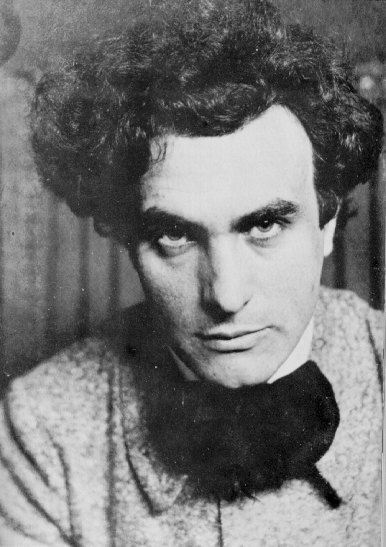
Speaking of 20th-century composers, if I ever become a full-time aesthete, haunting avant-garde salons and whatnot, I plan to adopt this look. Hearing this Boulez recording of Ionisation recently made me wonder if Brian Wilson was listening to Varèse around the time of Pet Sounds and the original Smile sessions. To me, there are some clear similarities - the layering of different percussion instruments and, of course, the use of fire sirens and (though not in Ionisation) theremins. I think there's something about the reverby room sound on the Boulez version that makes me think of the sounds Wilson was getting at Gold Star and Western Recorders. In other versions of Ionisation, I don't hear the connection as much. The Varèse-Zappa connection has been well documented (and the Varèse-Bird connection!), but, perhaps unsurprisingly, I've never heard Varèse mentioned in the same sentence as the Beach Boys.
3
Any list of the greatest guitar riffs of all time that does not include some version of Johnny Kidd & The Pirates' "Shakin' All Over" is not to be taken seriously. Check out Jimmy Page trying to remember it here.
4
Last week, I saw a screening of Glenn Ligon's film The Death of Tom at the Whitney, attracted by the prospect of hearing the score performed (actually spontaneously re-composed) by Jason Moran. The film and Moran's performance were worth walking through a hail storm for, and I got a lot out of the discussion after the screening. The topics included Ligon and Moran's mutual love of Monk; Ligon's artistic decision to let his original conception of the film go and yield to the opportunities afforded by an epic camera/film stock fail and Moran's music, ending up with a very different film than he'd envisioned; and Moran and the Bandwagon's ongoing process of wrestling with Bert Williams' massive-for-its-time hit "Nobody" (a hidden track on Ten and a main motif in Moran's Death of Tom music), with renditions often breaking into violent deconstruction and stopping just short of total destruction. There's a good interview of Ligon, conducted by Moran and covering some of the same topics as the Whitney discussion, here.
5
I recently found a great anecdote from the history of architecture that says something about the 20th-century tendency toward refinement (in the sense of removing impurities, extraneous elements) in design (although both of the architects in question were often less restrained in practice than the anecdote may suggest). To tangentially relate this last item to music, I'll note that it comes via the website of Ken Vandermark, the great Chicago saxophonist who I saw recently with Joe Morris and a couple years ago with Jason Moran.
Subscribe to:
Posts (Atom)