This may sound like a snob/connoisseur thing to say, but the original Police Squad! TV series, which lasted all of six episodes, was funnier and better than the Naked Gun movies in just about every way. I watched these things over and over again on VHS in the late-'80s/early-'90s and certain gags still pop into my head from time to time. Come to think of it, the complete series on DVD would make an excellent Christmas gift.
Leslie Nielsen certainly made some sub-par movies later in his career, but with the six episodes of Police Squad! and the other Zucker/Abrahams/Zucker exclamation-point-enhanced masterwork, Airplane!, he earned his lifetime pass. Some of the funniest sh*t I've ever seen.
Monday, November 29, 2010

Tuesday, November 16, 2010
The Holiday Season Is Box Set Season
I
Six discs of Orange Juice?!? Bring it on. OJ had a concept, a sound, that shouldn't have worked: awkward, white Scottish guys trying to play funky, dance-y, r'n'b-flavored pop/love songs in a DIY/post-punk milieu, fronted by a singer with a voice that, on first listen, seems completely, almost laughably wrong for this kind of music. The first time you hear them, you have to readjust your ears and your expectations. And then, if you're lucky, at some point it clicks and you get it. Off-kilter white "funk", a guy that can't sing doing a sensitive, vulnerable thing - these are elements that became somewhat common in the '80s underground/indie scene (and have been revived and recycled ever since), but even if you're familiar with the context, there's still something jarring and, ultimately, fresh about the way Orange Juice deployed/combined them to create their sound. The Housemartins were on to something similar, but they had a better, if still unconventional, singer in Paul Heaton and their aesthetic seems a bit easier to parse (Northern soul, gospel, Marxism, delivered with a bright tempo and mood). Orange Juice's influences, the components of their sound, don't come through so cleanly, perhaps (especially on their early Postcard material, documented on The Glasgow School) because of a simple lack of competence, a classic case of ambition outpacing ability to spectacular effect.
I don't know how long the link will be active, but the Guardian has a bunch of streaming preview tracks here.
II
Also on my Christmas list is this super-deluxe-looking Syl Johnson box from The Numero Group. I only know a handful of Johnson's records, mostly his top shelf (and sometimes uncannily Al Green-like) Hi Records work and the phenomenal "Is It Because I'm Black", so I'm very much looking forward to digging into this treasure trove. I'm also hoping to catch the man live at Southpaw in December, having missed him last time he was in town. Syl Johnson is right up there with O.V. Wright in the category of Undeniable Soul Masters who deserve to be more widely known.
III
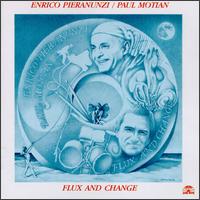
Speaking of treasure troves and six-disc boxes, I recently got the Paul Motian Black Saint/Soul Note set, which consists of six complete albums Motian made for the Italian label(s). Black Saint and Soul Note played a crucial role in picking up the slack left by American labels in documenting the most creative jazz that was happening from the late '70s into the '90s. The box includes One Time Out, an early (but not the first) Motian-Lovano-Frisell trio album, which contains some of that group's wildest excursions and one of Bill Frisell's freakiest guitar tones on record. There are also piano-drums duos with Paul Bley and Enrico Pieranunzi. The Pieranunzi (Flux and Change - attention Crap Jazz Covers, if you haven't seen this one, you need to check it out), a live record arranged into a series of suites or medleys combining improvised sections with standards, gave me a fuller appreciation of the Italian pianist's range. I'd previously thought of him as a fairly conventional, if brilliantly fluid, classically-inflected player in the Bill Evans line, but this album demonstrates his imagination and his ability to move between free playing and changes while keeping up a dynamic, exciting interaction with Motian. It's a fun listen and shows why this duo has continued to collaborate over the years (this looks like it could be a worthy sequel).
Three of the discs document the predecessor to Motian's long-running trio, the Paul Motian Quintet, with bassist Ed Schuller and saxophonist Jim Pepper along with Lovano and Frisell. I hadn't heard anything from this group before buying this box (although I had heard the earlier version of the Quintet with Billy Drewes instead of Pepper), but can now say definitively that these albums are prime Motian. If you're a fan and you don't have The Story of Maryam, Jack of Clubs, and Misterioso, you've got a serious gap in your collection and some good listening ahead of you. These albums include many Motian compositions that he would record again later, but the versions here are almost uniformly excellent, if not necessarily definitive. Motian the composer was fully formed by this point (the mid-'80s); these discs are full of characteristically beautiful and mysterious tunes like "Cathedral Song", "Trieste", "Byablue" (a gorgeous solo performance by Frisell), and the Motian tune par excellence, "Abacus". While some of his compositions, like "Circle Dance", can resemble bright, major-key folk songs, many of them achieve beauty while defying listener's expectations on a note-by-note level. The melodies don't progress or resolve in ways that we're accustomed to hearing; they strenuously avoid cliche. The next note is always a surprise, and so the tunes remain fresh and elusive. Monk's compositions (some of which appear in this box) often feature aggressively or humorously "off", "wrong", or discordant notes. Motian's compositions thrive on the unexpected note, the one that doesn't so much sound "wrong" as surprising or counterintuitive.
(Strangely enough, this is not my first post that mentions both Syl Johnson and Paul Motian)
Six discs of Orange Juice?!? Bring it on. OJ had a concept, a sound, that shouldn't have worked: awkward, white Scottish guys trying to play funky, dance-y, r'n'b-flavored pop/love songs in a DIY/post-punk milieu, fronted by a singer with a voice that, on first listen, seems completely, almost laughably wrong for this kind of music. The first time you hear them, you have to readjust your ears and your expectations. And then, if you're lucky, at some point it clicks and you get it. Off-kilter white "funk", a guy that can't sing doing a sensitive, vulnerable thing - these are elements that became somewhat common in the '80s underground/indie scene (and have been revived and recycled ever since), but even if you're familiar with the context, there's still something jarring and, ultimately, fresh about the way Orange Juice deployed/combined them to create their sound. The Housemartins were on to something similar, but they had a better, if still unconventional, singer in Paul Heaton and their aesthetic seems a bit easier to parse (Northern soul, gospel, Marxism, delivered with a bright tempo and mood). Orange Juice's influences, the components of their sound, don't come through so cleanly, perhaps (especially on their early Postcard material, documented on The Glasgow School) because of a simple lack of competence, a classic case of ambition outpacing ability to spectacular effect.
I don't know how long the link will be active, but the Guardian has a bunch of streaming preview tracks here.
II
Also on my Christmas list is this super-deluxe-looking Syl Johnson box from The Numero Group. I only know a handful of Johnson's records, mostly his top shelf (and sometimes uncannily Al Green-like) Hi Records work and the phenomenal "Is It Because I'm Black", so I'm very much looking forward to digging into this treasure trove. I'm also hoping to catch the man live at Southpaw in December, having missed him last time he was in town. Syl Johnson is right up there with O.V. Wright in the category of Undeniable Soul Masters who deserve to be more widely known.
III
Speaking of treasure troves and six-disc boxes, I recently got the Paul Motian Black Saint/Soul Note set, which consists of six complete albums Motian made for the Italian label(s). Black Saint and Soul Note played a crucial role in picking up the slack left by American labels in documenting the most creative jazz that was happening from the late '70s into the '90s. The box includes One Time Out, an early (but not the first) Motian-Lovano-Frisell trio album, which contains some of that group's wildest excursions and one of Bill Frisell's freakiest guitar tones on record. There are also piano-drums duos with Paul Bley and Enrico Pieranunzi. The Pieranunzi (Flux and Change - attention Crap Jazz Covers, if you haven't seen this one, you need to check it out), a live record arranged into a series of suites or medleys combining improvised sections with standards, gave me a fuller appreciation of the Italian pianist's range. I'd previously thought of him as a fairly conventional, if brilliantly fluid, classically-inflected player in the Bill Evans line, but this album demonstrates his imagination and his ability to move between free playing and changes while keeping up a dynamic, exciting interaction with Motian. It's a fun listen and shows why this duo has continued to collaborate over the years (this looks like it could be a worthy sequel).
Three of the discs document the predecessor to Motian's long-running trio, the Paul Motian Quintet, with bassist Ed Schuller and saxophonist Jim Pepper along with Lovano and Frisell. I hadn't heard anything from this group before buying this box (although I had heard the earlier version of the Quintet with Billy Drewes instead of Pepper), but can now say definitively that these albums are prime Motian. If you're a fan and you don't have The Story of Maryam, Jack of Clubs, and Misterioso, you've got a serious gap in your collection and some good listening ahead of you. These albums include many Motian compositions that he would record again later, but the versions here are almost uniformly excellent, if not necessarily definitive. Motian the composer was fully formed by this point (the mid-'80s); these discs are full of characteristically beautiful and mysterious tunes like "Cathedral Song", "Trieste", "Byablue" (a gorgeous solo performance by Frisell), and the Motian tune par excellence, "Abacus". While some of his compositions, like "Circle Dance", can resemble bright, major-key folk songs, many of them achieve beauty while defying listener's expectations on a note-by-note level. The melodies don't progress or resolve in ways that we're accustomed to hearing; they strenuously avoid cliche. The next note is always a surprise, and so the tunes remain fresh and elusive. Monk's compositions (some of which appear in this box) often feature aggressively or humorously "off", "wrong", or discordant notes. Motian's compositions thrive on the unexpected note, the one that doesn't so much sound "wrong" as surprising or counterintuitive.
(Strangely enough, this is not my first post that mentions both Syl Johnson and Paul Motian)
Monday, November 15, 2010
Leitch At The Movies, Part Two
This is awesome news:
Will Leitch, who, as I've noted before, I've been reading since approximately 1994, finally has a full-time gig writing about movies, his true calling.
Will Leitch, who, as I've noted before, I've been reading since approximately 1994, finally has a full-time gig writing about movies, his true calling.
Tuesday, November 9, 2010
Lincoln Goes All In
I see that others have already picked up on this, but I was reading a news item about the coming flood of investigations the new Republican-controlled House intends to unleash when I noticed something very interesting in the background of the photo of Rep. Darrell Issa of California. It's a painting executed in a very niche style: Republican Art. It depicts a bunch of Republican presidents playing poker and busting a gut at a joke presumably told by Abe Lincoln, who appears with his back to the viewer. Here's a closer look at what may be the cheesiest sh*t I've seen this side of a Thomas Kinkade.
While the obvious analogy is to "Dogs Playing Poker", I think this painting perhaps has more in common with the popular dorm room poster, Boulevard of Broken Dreams, as both works replace the nameless figures in a familiar artwork with representations of historical figures in order to make some comment on those figures. In the case of the reworking of Edward Hopper's Nighthawks, the viewer is supposed to gather than Elvis, Bogart, James Dean, and Marilyn Monroe were, despite (or because of) their fame, just as lonely and isolated as Hopper's diner crowd. In the painting I'll call Republican Presidents Playing Poker, the message appears to be that were these leaders of various eras to be gathered around a card table, they would surely find themselves to be kindred spirits, as unified in their Republicanism as the poker-playing dogs are by their dog-ness. As for the joke Lincoln is telling in the painting, I'd be willing to bet Bush 41's pile of chips that it involves Nancy Pelosi.
While the obvious analogy is to "Dogs Playing Poker", I think this painting perhaps has more in common with the popular dorm room poster, Boulevard of Broken Dreams, as both works replace the nameless figures in a familiar artwork with representations of historical figures in order to make some comment on those figures. In the case of the reworking of Edward Hopper's Nighthawks, the viewer is supposed to gather than Elvis, Bogart, James Dean, and Marilyn Monroe were, despite (or because of) their fame, just as lonely and isolated as Hopper's diner crowd. In the painting I'll call Republican Presidents Playing Poker, the message appears to be that were these leaders of various eras to be gathered around a card table, they would surely find themselves to be kindred spirits, as unified in their Republicanism as the poker-playing dogs are by their dog-ness. As for the joke Lincoln is telling in the painting, I'd be willing to bet Bush 41's pile of chips that it involves Nancy Pelosi.
Tuesday, November 2, 2010
Three Food Tips
I.
I'd heard some internet murmurings that Soup Burg, a nondescript diner on the Upper East Side that I had walked by many times without taking notice, justified the second half of its name by serving a mighty fine burger. I have confirmed that these rumblings are true. The patty is big, loosely packed, and if you order it on the rare side, there's a nice contrast between the crisp char on the surface and the super-juicy pink center. If that last sentence sounded at all sexual, I apologize.
II.
If you're looking for a way to liven up a bland Chinese takeout meal, might I suggest stirring in a small spoonful of Indian pickle (say, a nice mango chili). Transformative.
III.
Pickled turkey gizzards, straight out of the jar, may not sound appetizing, but you might be surprised. I was. They're a highlight of the excellent "bar snacks" menu (consisting mostly of pickled things in jars) at The Old Fashioned in Madison, WI. This place packs 'em in, and with good reason. If you find yourself in Madison, go and drop a buck on a gizzard. You won't be sorry, and even if you are, you've only blown a dollar on the experiment, and you can tell people you ate a pickled turkey gizzard. Worth it for the anecdote alone. Also, this place lets you add braunschweiger to any sandwich for $1.25 - as a Midwestern German-American, this almost brings tears to my eyes. As much I as like this place, I still have to say that the namesake drink, a Wisconsin tradition, is an abomination, a warped bastardization of one of the foundational classic cocktails. They should just call the drink a Badger, and I'd be OK with it.
I'd heard some internet murmurings that Soup Burg, a nondescript diner on the Upper East Side that I had walked by many times without taking notice, justified the second half of its name by serving a mighty fine burger. I have confirmed that these rumblings are true. The patty is big, loosely packed, and if you order it on the rare side, there's a nice contrast between the crisp char on the surface and the super-juicy pink center. If that last sentence sounded at all sexual, I apologize.
II.
If you're looking for a way to liven up a bland Chinese takeout meal, might I suggest stirring in a small spoonful of Indian pickle (say, a nice mango chili). Transformative.
III.
Pickled turkey gizzards, straight out of the jar, may not sound appetizing, but you might be surprised. I was. They're a highlight of the excellent "bar snacks" menu (consisting mostly of pickled things in jars) at The Old Fashioned in Madison, WI. This place packs 'em in, and with good reason. If you find yourself in Madison, go and drop a buck on a gizzard. You won't be sorry, and even if you are, you've only blown a dollar on the experiment, and you can tell people you ate a pickled turkey gizzard. Worth it for the anecdote alone. Also, this place lets you add braunschweiger to any sandwich for $1.25 - as a Midwestern German-American, this almost brings tears to my eyes. As much I as like this place, I still have to say that the namesake drink, a Wisconsin tradition, is an abomination, a warped bastardization of one of the foundational classic cocktails. They should just call the drink a Badger, and I'd be OK with it.
Monday, October 18, 2010
Albums of the Moment
I've purchased a lot of music lately, both online and on my trip to Chicago (Reckless Records!). I haven't even listened to all of it yet, but here are some quick notes on the stuff I've been playing most in the last week or two:
Jakob Bro - Balladeering
This Danish guitarist's album is like the perfect blend of a Bill Frisell album and a Paul Motian album, both of whom, not coincidentally, appear on it along with Lee Konitz and bassist Ben Street. There's some great footage on YouTube from a making-of documentary that was included in a deluxe edition of the album. This 2009 record is kind of hard to find in physical form, but it is on iTunes. Konitz is one of those major figures I haven't paid enough attention to, but he has some absolutely sublime moments here. He doesn't play on the album's first track, but his entrance on the gentle, almost children's-song-like "Evening Song" is one of the finest, most memorable moments of music I've heard all year.
Tim Berne Sextet - The Ancestors
An Amazon MP3 Store find for under $3, this is a live album with just 3 long tracks (two of which are Parts 1 & 2 of the same tune, presumably split when the album came out on vinyl). There's some great Paul Motian on this album, including what may be one of his best (and longest?) solos on record. I was walking the other night on Houston St., from the quieter western reaches heading east. The Jakob Bro album ended just as I reached Broadway and the opening track of this ("Sirius B") was the ideal soundtrack for the nighttime bustle of Manhattan.
The Bad Plus - Never Stop
I listened to this walking around Chicago and it seemed to be giving me energy, like a musical battery (I would recommend a loop of the title track to marathoners-in-training). Never Stop, more than just about anything else, made me thankful for my new headphones (Koss PortaPros) and their nice bass response (an exponential improvement over my old earbuds). I'm sure Ethan Iverson and Dave King would sound good as a duo, but if you can't properly hear what Reid Anderson is playing on this album, you're not really listening to it.
Teenage Fanclub - Bandwagonesque
When I first got this album, it didn't quite click with me for some reason. I really liked "Metal Baby" and was lukewarm on the rest. Now, after seeing them live and relistening to this for the first time in years, I get it. How could "The Concept" have eluded me (I didn't intend that as a pun)? It still pales in comparison to the Fanclub's obvious inspiration, Big Star, but it gets a lot of things right and not much wrong. I hear TF's music as taking "The Ballad of El Goodo" as its starting point - the power ballad side of Big Star. They don't have the funkier, Memphis soul-derived aspects, or the sense of half-willfully teetering on the edge of madness and collapse that was part of both Chilton and Bell's natures.
Marc-Andre Hamelin - Etudes
After seeing Hamelin for the first time recently at Le Poisson Rouge, where he played a program of pieces from this, his latest record (the bulk of which is devoted to Hamelin's set of 12 etudes in each of the minor keys), there was no question that I had to have this music. As a person who still struggles to read music, a quick look through the scores for the etudes (which was for sale at LPR) made me feel like a third-grader trying to make sense of Infinite Jest, but this is far from mere virtuoso show-off material. Hamelin's music is melodically and harmonically rich and as finely and intricately layered as a piece of Louis Sullivan ornament (see my previous post). Hamelin's ability to render all of these layers and strands so that they can be heard individually as well as part of the total composition may be a more impressive, and, for the listener, probably more valuable, skill than the sheer, incredible volume of notes he's able to produce in a given measure. The etude that first grabbed me was No.7 (for the left hand alone), a gorgeous piece of music and, for obvious reasons, a feat of technique, but 8 (a musical setting of a Goethe poem) and 11 (a minuet) have also become early favorites (I expect that many, many more listens will be required to get to the bottom of this music).
One album I'm looking forward to is Volume II of Henry Threadgill's This Brings Us To, which I mention because I was just checking out Studs Terkel's 2005 book And They All Sang, which features a chapter on Threadgill. In 2005, Terkel was 93. A 93 year old man, who was 16 when his favorite jazz record, Louis Armstrong's "West End Blues", came out, was into Henry Threadgill. Can you get any hipper than that? [A day or so after writing the above, but before posting, I thought I spotted Threadgill outside Jazz Standard. Presumably, he was there, as I was, to check out Apex. For some reason, I feel compelled to use profanity to describe just how good this group sounded, so I'll at least keep it brief. Two word review: sh*t hot. And to expand on that: really f*cking good.]
Jakob Bro - Balladeering
This Danish guitarist's album is like the perfect blend of a Bill Frisell album and a Paul Motian album, both of whom, not coincidentally, appear on it along with Lee Konitz and bassist Ben Street. There's some great footage on YouTube from a making-of documentary that was included in a deluxe edition of the album. This 2009 record is kind of hard to find in physical form, but it is on iTunes. Konitz is one of those major figures I haven't paid enough attention to, but he has some absolutely sublime moments here. He doesn't play on the album's first track, but his entrance on the gentle, almost children's-song-like "Evening Song" is one of the finest, most memorable moments of music I've heard all year.
Tim Berne Sextet - The Ancestors
An Amazon MP3 Store find for under $3, this is a live album with just 3 long tracks (two of which are Parts 1 & 2 of the same tune, presumably split when the album came out on vinyl). There's some great Paul Motian on this album, including what may be one of his best (and longest?) solos on record. I was walking the other night on Houston St., from the quieter western reaches heading east. The Jakob Bro album ended just as I reached Broadway and the opening track of this ("Sirius B") was the ideal soundtrack for the nighttime bustle of Manhattan.
The Bad Plus - Never Stop
I listened to this walking around Chicago and it seemed to be giving me energy, like a musical battery (I would recommend a loop of the title track to marathoners-in-training). Never Stop, more than just about anything else, made me thankful for my new headphones (Koss PortaPros) and their nice bass response (an exponential improvement over my old earbuds). I'm sure Ethan Iverson and Dave King would sound good as a duo, but if you can't properly hear what Reid Anderson is playing on this album, you're not really listening to it.
Teenage Fanclub - Bandwagonesque
When I first got this album, it didn't quite click with me for some reason. I really liked "Metal Baby" and was lukewarm on the rest. Now, after seeing them live and relistening to this for the first time in years, I get it. How could "The Concept" have eluded me (I didn't intend that as a pun)? It still pales in comparison to the Fanclub's obvious inspiration, Big Star, but it gets a lot of things right and not much wrong. I hear TF's music as taking "The Ballad of El Goodo" as its starting point - the power ballad side of Big Star. They don't have the funkier, Memphis soul-derived aspects, or the sense of half-willfully teetering on the edge of madness and collapse that was part of both Chilton and Bell's natures.
Marc-Andre Hamelin - Etudes
After seeing Hamelin for the first time recently at Le Poisson Rouge, where he played a program of pieces from this, his latest record (the bulk of which is devoted to Hamelin's set of 12 etudes in each of the minor keys), there was no question that I had to have this music. As a person who still struggles to read music, a quick look through the scores for the etudes (which was for sale at LPR) made me feel like a third-grader trying to make sense of Infinite Jest, but this is far from mere virtuoso show-off material. Hamelin's music is melodically and harmonically rich and as finely and intricately layered as a piece of Louis Sullivan ornament (see my previous post). Hamelin's ability to render all of these layers and strands so that they can be heard individually as well as part of the total composition may be a more impressive, and, for the listener, probably more valuable, skill than the sheer, incredible volume of notes he's able to produce in a given measure. The etude that first grabbed me was No.7 (for the left hand alone), a gorgeous piece of music and, for obvious reasons, a feat of technique, but 8 (a musical setting of a Goethe poem) and 11 (a minuet) have also become early favorites (I expect that many, many more listens will be required to get to the bottom of this music).
One album I'm looking forward to is Volume II of Henry Threadgill's This Brings Us To, which I mention because I was just checking out Studs Terkel's 2005 book And They All Sang, which features a chapter on Threadgill. In 2005, Terkel was 93. A 93 year old man, who was 16 when his favorite jazz record, Louis Armstrong's "West End Blues", came out, was into Henry Threadgill. Can you get any hipper than that? [A day or so after writing the above, but before posting, I thought I spotted Threadgill outside Jazz Standard. Presumably, he was there, as I was, to check out Apex. For some reason, I feel compelled to use profanity to describe just how good this group sounded, so I'll at least keep it brief. Two word review: sh*t hot. And to expand on that: really f*cking good.]
Thursday, October 14, 2010
Chicago Notes, Part One: Midwestern Mystics
The Selected Ballads has been away for a while, partly due to a trip to Chicago. Some notes from the Great Metropolis on the Prairie:
For the first time in several years, I revisited Millennium Park and the adjacent Art Institute. Last time I was there, the Cloud Gate was being buffed to remove the seams between the individual mirror squares that make up the surface of the "bean". Now, there's not a seam in sight, and one could almost believe the whole thing had been poured into a mold. Looking again at Frank Gehry's Pritzker Pavilion, I was thinking what a thrill it would be to stand in front of a big audience and unleash a highly amplified open E chord into that space. Has anyone ever asked Jeff Tweedy or Steve Malkmus about that?
If it does nothing else, Renzo Piano's addition to the Art Institute, the Modern Wing, provides a much-needed connection between the museum and Millennium Park, both at ground level and via a bridge that rises from park level to the 2nd floor of the new wing. Fortunately, it's also a pretty nice piece of architecture - well-detailed, restrained in its use of a limited palette of colors and materials, and in harmony with both the park to the north and the main Institute building to the south (apparently, there are some problems, though). A lot of care was taken to make the new wing energy-efficient, including the admittance of quite a bit of natural light, which actually made me realize that I prefer to feel a little less connected to the outdoors when looking at art in a museum. Maybe it was the beautiful day I visited on, but the natural light entering (from the less art-damaging northern direction, as per Piano's design) the Modern Wing started to make me wish I was back outside, a feeling that disappeared once I was back in the main body of the Institute.
On the other side of the Institute, Dan Kiley's '60s-era South Garden may now be overshadowed by all the design action to the north, but it has aged well and remains a high point of Modernist landscape architecture. Kiley's design sets up a simple grid, gets the grades, materials, and proportions right, and basically gets out of the way to let a by-now-mature grove of cockspur hawthorns create an environment quite apart from the nearby Loop.
Visiting the exhibit, Looking After Louis Sullivan, was a bit like going to church for me, as I consider myself an initiate in the great master's dualistic-mystic cult of organic-geometric architecture. The show featured the work of four photographers, including the heroic martyr to architectural preservation, Richard Nickel, as well as some of Sullivan's own drawings. Among these drawings, I spent a long time studying the incredibly intricate, pencil-drawn plates from A System of Architectural Ornament, According with a Philosophy of Man's Powers, a commissioned work completed near the end of Sullivan's life. A diagram (titled "Manipulation of the Organic") showing how a relatively simple natural form like a leaf or a seed pod could, by following nature's example, be elaborated and abstracted into a complex piece of ornament, reminded me of some of the ideas of Sullivan's approximate contemporary Gaudi (an adjacent drawing, showing a similar process of elaboration with geometric forms, also had some resonance with Gaudi's work). Just because both men took inspiration from the forms of plants and obsessively elaborated geometric forms doesn't mean they were aware of, or in any way influenced by, one another's work, but it's an intriguing possibility.
I also visited the Garfield Park Conservatory, one of the masterworks of another of my heroes, Sullivan's fellow Midwestern mystic, landscape architect Jens Jensen. The conservatory, and specifically its fern room, were recommended to me as a must-see masterpiece, but I had a hard time believing than an interior landscape could be in the same class as Jensen's great parks and gardens. It is, though. The fern room is a complete landscape, a complete work of art even, as meticulously thought out and calibrated for various effects as a traditional Japanese garden, but with more of a concern for hiding the hand of man. The fern room is both an immersive, mist-shrouded prehistoric fantasy and a landscape composition that would reward close study. This story, which is also summarized on a plaque in the fern room, gives a sense of Jensen and the perhaps more genteel times in which he practiced (whether or not the story is 100% factual hardly matters).
For the first time in several years, I revisited Millennium Park and the adjacent Art Institute. Last time I was there, the Cloud Gate was being buffed to remove the seams between the individual mirror squares that make up the surface of the "bean". Now, there's not a seam in sight, and one could almost believe the whole thing had been poured into a mold. Looking again at Frank Gehry's Pritzker Pavilion, I was thinking what a thrill it would be to stand in front of a big audience and unleash a highly amplified open E chord into that space. Has anyone ever asked Jeff Tweedy or Steve Malkmus about that?
If it does nothing else, Renzo Piano's addition to the Art Institute, the Modern Wing, provides a much-needed connection between the museum and Millennium Park, both at ground level and via a bridge that rises from park level to the 2nd floor of the new wing. Fortunately, it's also a pretty nice piece of architecture - well-detailed, restrained in its use of a limited palette of colors and materials, and in harmony with both the park to the north and the main Institute building to the south (apparently, there are some problems, though). A lot of care was taken to make the new wing energy-efficient, including the admittance of quite a bit of natural light, which actually made me realize that I prefer to feel a little less connected to the outdoors when looking at art in a museum. Maybe it was the beautiful day I visited on, but the natural light entering (from the less art-damaging northern direction, as per Piano's design) the Modern Wing started to make me wish I was back outside, a feeling that disappeared once I was back in the main body of the Institute.
On the other side of the Institute, Dan Kiley's '60s-era South Garden may now be overshadowed by all the design action to the north, but it has aged well and remains a high point of Modernist landscape architecture. Kiley's design sets up a simple grid, gets the grades, materials, and proportions right, and basically gets out of the way to let a by-now-mature grove of cockspur hawthorns create an environment quite apart from the nearby Loop.
Visiting the exhibit, Looking After Louis Sullivan, was a bit like going to church for me, as I consider myself an initiate in the great master's dualistic-mystic cult of organic-geometric architecture. The show featured the work of four photographers, including the heroic martyr to architectural preservation, Richard Nickel, as well as some of Sullivan's own drawings. Among these drawings, I spent a long time studying the incredibly intricate, pencil-drawn plates from A System of Architectural Ornament, According with a Philosophy of Man's Powers, a commissioned work completed near the end of Sullivan's life. A diagram (titled "Manipulation of the Organic") showing how a relatively simple natural form like a leaf or a seed pod could, by following nature's example, be elaborated and abstracted into a complex piece of ornament, reminded me of some of the ideas of Sullivan's approximate contemporary Gaudi (an adjacent drawing, showing a similar process of elaboration with geometric forms, also had some resonance with Gaudi's work). Just because both men took inspiration from the forms of plants and obsessively elaborated geometric forms doesn't mean they were aware of, or in any way influenced by, one another's work, but it's an intriguing possibility.
I also visited the Garfield Park Conservatory, one of the masterworks of another of my heroes, Sullivan's fellow Midwestern mystic, landscape architect Jens Jensen. The conservatory, and specifically its fern room, were recommended to me as a must-see masterpiece, but I had a hard time believing than an interior landscape could be in the same class as Jensen's great parks and gardens. It is, though. The fern room is a complete landscape, a complete work of art even, as meticulously thought out and calibrated for various effects as a traditional Japanese garden, but with more of a concern for hiding the hand of man. The fern room is both an immersive, mist-shrouded prehistoric fantasy and a landscape composition that would reward close study. This story, which is also summarized on a plaque in the fern room, gives a sense of Jensen and the perhaps more genteel times in which he practiced (whether or not the story is 100% factual hardly matters).
Subscribe to:
Comments (Atom)